

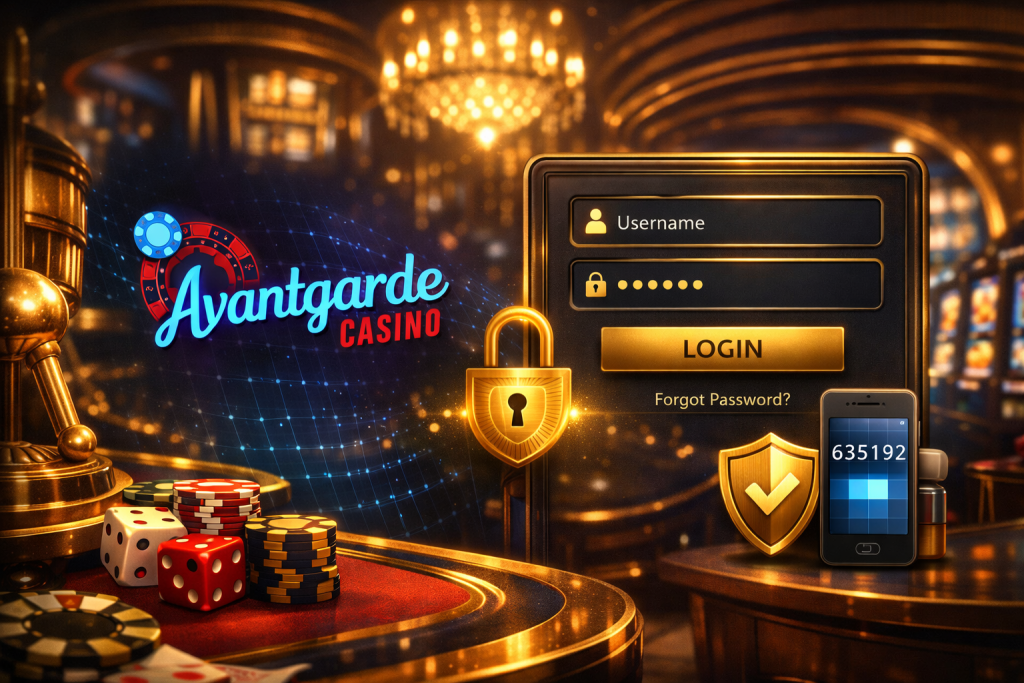
Accessing a player account is the central gateway to any regulated online casino environment. The login process at Avantgarde Casino is designed to balance usability, device flexibility, and layered account protection in line with modern UK cybersecurity and telecom standards.
This guide explains how account authentication works, what credentials are required, how access differs across devices, and what security protocols operate behind the interface. It is written as an informational reference rather than promotional material.
Account Access Overview
Player login functions as the authentication checkpoint between personal account data and platform services. It verifies identity, restores account sessions, synchronises wallet balances, and unlocks personalised gameplay environments.
When logging in, users connect to encrypted servers that validate credentials before granting session tokens. These tokens manage real-time access across platform areas, including cashier tools, transaction records, responsible gambling settings, and gameplay dashboards.
For new users, account access begins only after completing the Sign up process, where identity details and communication credentials are registered.
What Login Means — Technical Context
Login is not simply entering a password; it is a multi-layer authentication workflow involving:
- Credential verification
- Device recognition
- Location validation
- Session encryption
- Behavioural monitoring
Each successful login generates a temporary session environment. This session ensures that:
- Account balances are accurate
- Gameplay history is restored
- Promotional eligibility is validated
- Regulatory compliance flags are applied
Authentication systems align with guidance from organisations such as the National Cyber Security Centre and telecom infrastructure frameworks regulated by Ofcom.
Platform Login Channels — App vs Browser
Players may access accounts through two primary environments:
- Web browser login
- Mobile App login
Both routes lead to the same account database but differ in device integration, biometric support, and session persistence.
Platform Comparison Table
| Feature | Browser Login | Mobile App Login |
|---|---|---|
| Access method | URL interface | Installed application |
| Session duration | Shorter | Extended |
| Biometric login | Limited | Supported |
| Push verification | No | Yes |
| Offline credential storage | No | Encrypted local cache |
| Performance stability | Network dependent | Optimised |
Telecom delivery quality may vary depending on UK ISP infrastructure. Broadband performance guidance can be reviewed via BT Group network reports and mobile latency benchmarks published by Vodafone UK.
Step-by-Step Login Guide
Desktop / Browser Access
- Open the official casino website.
- Locate the Login button in the header.
- Enter registered email or username.
- Input account password.
- Complete security verification (if prompted).
- Confirm session entry.
Once authenticated, users gain access to cashier services, responsible play tools, and all active Games categories.
Mobile Access Workflow
- Launch the mobile platform environment.
- Enter account credentials.
- Complete biometric or OTP validation.
- Confirm encrypted session.
Mobile login environments often enable faster access to wallet dashboards, Slots lobbies, and in-session notifications tied to account activity.
One-Time Password (OTP) Authentication
OTP verification functions as a secondary authentication layer.
It activates under conditions such as:
- New device login
- Password reset
- Suspicious session detection
- Geographic IP change
OTP delivery channels include:
- SMS telecom routing
- Email encryption gateways
- App push authentication
UK telecom routing reliability frameworks are overseen by Ofcom, ensuring delivery standards for authentication messaging.
Login Issues & Resolution Table
| Issue | Possible Cause | Resolution |
|---|---|---|
| Incorrect password | Typing error | Reset credentials |
| OTP not received | Network delay | Request resend |
| Account locked | Multiple attempts | Wait or contact support |
| Browser incompatibility | Outdated software | Update browser |
| Geo-restriction | Regional block | Verify location |
| Session timeout | Idle logout | Re-authenticate |
Cybersecurity recovery guidance aligns with best practices outlined by the National Cyber Security Centre.
Security Framework — Behind the Login Interface
Login environments integrate several protective layers:
- SSL encryption tunnels
- Tokenised session keys
- Firewall filtering
- Intrusion detection systems
- Behavioural anomaly monitoring
These systems protect financial transactions, account credentials, and gameplay activity tied to wallet funds and Bonus balances.
Device Compatibility
Login systems are optimised across:
- Windows desktops
- macOS systems
- iOS smartphones
- Android devices
- Tablet browsers
Device compatibility ensures stable access to wallet dashboards and gaming environments regardless of hardware configuration.
Session Protection & Auto-Logout
To minimise unauthorised access risk, sessions may terminate automatically after inactivity.
Triggers include:
- Idle gameplay sessions
- Incomplete cashier actions
- Security timeouts
Auto-logout prevents exposure of account funds or gameplay histories if a device is left unattended.
Account Recovery Access — Credential Restoration Framework
Account recovery infrastructure exists to restore user access when login credentials become unavailable, compromised, or forgotten. This process is structured around identity validation rather than simple password replacement.
Recovery protocols are activated in cases such as:
- Forgotten password
- Lost email access
- Device change
- Suspicious login lock
- Security flag triggers
Unlike standard login workflows, recovery sessions require additional verification layers to ensure that access is restored only to the legitimate account holder.
Recovery Verification Layers
Credential restoration may involve one or more of the following:
- Registered email confirmation
- SMS authentication
- Security question validation
- Date-of-birth confirmation
- Partial ID verification
These steps align with UK digital identity protection frameworks and data-handling guidance supported by the Information Commissioner’s Office.
Password Reset Infrastructure
Password reset processes operate through encrypted credential regeneration environments.
Reset Workflow
- User selects “Forgot Password.”
- System sends secure reset link.
- Link expires after limited timeframe.
- User creates new credential.
- Security revalidation occurs.
Password requirements typically include:
- Minimum character length
- Uppercase/lowercase mix
- Numeric integration
- Special characters
Security standards follow authentication best practices outlined by the National Cyber Security Centre.
Device Recognition Systems
Login systems incorporate device fingerprinting technology to distinguish trusted hardware from unknown access points.
Device Recognition Includes
- IP address logging
- Operating system identification
- Browser signature
- Session cookies
- Hardware encryption tokens
When a recognised device logs in, authentication friction is reduced. Unknown devices may trigger OTP or additional verification steps.
Geo-Location & Regional Restrictions
Access environments are governed by jurisdictional compliance frameworks. Even within licensed regions, login permissions may vary depending on:
- Player residency status
- IP routing origin
- Telecom network provider
- VPN detection flags
UK regulatory oversight ensures that only permitted regions may access licensed gaming environments.
Network routing compliance may reference telecom frameworks managed by Ofcom and ISP infrastructure such as BT Group.
Multi-Session Monitoring
Login systems monitor simultaneous sessions to prevent account sharing or unauthorised dual access.
Triggers include:
- Concurrent logins from separate regions
- Device mismatch activity
- Session overlap detection
If detected, systems may:
- Terminate sessions
- Lock the account
- Require reauthentication
Responsible Gambling Login Controls
Account access is also linked to responsible gambling enforcement tools.
Login-connected safeguards include:
- Deposit limit locks
- Cooling-off enforcement
- Self-exclusion triggers
- Reality check notifications
If a player has activated protective controls, login sessions may display restrictions immediately upon entry.
This ensures that protective tools remain active regardless of device or session type.
Session Encryption & Data Transport Security
All login sessions operate through encrypted data tunnels.
Encryption Layers
- TLS/SSL transport encryption
- Tokenised session validation
- Secure cookie frameworks
- Firewall gateway filtering
These layers prevent credential interception and unauthorised packet monitoring during login transmissions.
Cyber-transport protection models align with telecom security routing guidance published by organisations such as Vodafone UK.
Behavioural Risk Monitoring
Login environments analyse behavioural patterns to detect anomalies.
Monitoring signals include:
- Typing cadence
- Login time patterns
- Geographic anomalies
- Device switching frequency
If irregularities are detected, systems may request:
- OTP revalidation
- Email confirmation
- Manual review
Login Session Lifecycle
Each login session follows a structured lifecycle:
- Credential submission
- Identity verification
- Device recognition
- Session encryption
- Platform access
- Behaviour monitoring
- Auto-logout trigger
This lifecycle ensures that account environments remain secure throughout user interaction periods.
Integration with Gameplay & Wallet Systems
Once authenticated, login sessions synchronise multiple account modules:
- Wallet balances
- Transaction history
- Gameplay logs
- Active promotions
- Loyalty tracking
This environment enables players to access live gameplay environments, including instant titles and immersive live tables, without requiring repeated authentication.
Security Notifications & Alerts
Players may receive automated alerts tied to login activity.
Notification Triggers
- New device access
- Password changes
- Failed login attempts
- Regional login detection
These alerts help players identify suspicious behaviour early and initiate credential protection steps if necessary.
Cybersecurity Foundations of Casino Login Systems
Secure login environments operate within multi-layer cybersecurity frameworks designed to protect identity credentials, session tokens, and financial data. These infrastructures combine platform-side protection with user-side behavioural safeguards.
Casino login systems function similarly to digital banking gateways — applying layered access validation rather than single-point credential entry.
Key protection layers include:
- Identity authentication
- Network encryption
- Session validation
- Behavioural anomaly detection
- Device fingerprinting
Cybersecurity alignment in the UK is informed by national digital defence standards supported by the National Cyber Security Centre.
Credential Threat Landscape
Login environments are exposed to a range of cyber threats that attempt to exploit weak authentication habits or unsecured networks.
Common Login Threat Vectors
- Phishing credential harvesting
- Malware keylogging
- Credential stuffing attacks
- Fake mirror login pages
- Public Wi-Fi interception
Credential stuffing, for example, uses breached password databases to attempt automated logins across multiple platforms.
Password Hygiene & Credential Architecture
Strong password design significantly reduces unauthorised access risk.
Secure Password Framework
Recommended structures include:
- 12–16 character length
- Mixed alphanumeric structure
- Symbol inclusion
- Unique credential use
- No personal identifiers
Avoid reusing passwords across financial, telecom, or gaming platforms. Password duplication increases vulnerability if one platform experiences a breach.
Password guidance frameworks align with identity protection recommendations from the Information Commissioner’s Office.
Two-Factor Authentication Reinforcement
While OTP systems validate login attempts, users can reinforce access security by enabling layered authentication where available.
Additional layers may include:
- Authenticator apps
- Device push confirmations
- Biometric validation
These systems create time-sensitive verification barriers that prevent unauthorised login even if credentials are compromised.
Network Stability & Telecom Dependencies
Login performance is closely tied to telecom infrastructure quality. Network interruptions may cause:
- OTP delays
- Session timeouts
- Failed login attempts
- Authentication resets
UK telecom routing frameworks are regulated by Ofcom, ensuring baseline infrastructure stability across major providers.
Primary telecom routing partners include networks such as EE and O2 UK.
Public Wi-Fi Risk Exposure
Public networks represent one of the most common login vulnerabilities.
Risks Include
- Packet interception
- Fake hotspot spoofing
- Session hijacking
- DNS manipulation
Users should avoid logging into gaming or financial platforms while connected to:
- Airports
- Hotels
- Cafés
- Shared coworking hubs
If unavoidable, encrypted VPN tunnels should be used to mask credential transmission.
VPN & Proxy Detection
Login systems monitor for anonymised routing patterns.
Detected signals include:
- IP masking
- Region spoofing
- Proxy rerouting
- Server-based tunnelling
While VPNs can enhance personal privacy, they may also trigger login verification barriers or access restrictions if regulatory geolocation compliance cannot be validated.
Browser Security Hardening
Secure login also depends on browser integrity.
Recommended Practices
- Use updated browsers
- Enable HTTPS-only mode
- Disable auto-fill on shared devices
- Clear session cookies regularly
- Avoid unknown extensions
Malicious browser extensions can intercept login data or redirect users to fraudulent login mirrors.
Device-Level Protection
Login security extends to endpoint hardware.
Protective measures include:
- Device PIN or biometric lock
- OS updates
- Anti-malware scanning
- Firewall activation
Mobile login sessions accessed through the casino App environment may include biometric login shortcuts such as Face ID or fingerprint validation, reducing password exposure risk.
Behavioural Monitoring Systems
Login ecosystems utilise AI-driven behavioural analytics to identify anomalies.
Monitored Indicators
- Typing speed irregularities
- Login time deviations
- Geolocation jumps
- Device switching patterns
If anomalies are detected, systems may:
- Require OTP revalidation
- Trigger session lock
- Initiate manual review
Session Timeout Safeguards
Auto-logout protocols protect inactive login sessions from unauthorised access.
Timeout triggers typically activate after:
- 10–30 minutes inactivity
- Device sleep state
- Browser closure
- Network interruption
This ensures that open sessions cannot be exploited if a device is left unattended.
Login Data Storage & Encryption
Credential storage environments utilise encrypted hashing rather than plain-text password storage.
Security architecture includes:
- Hash salting
- Token encryption
- Segmented credential storage
- Secure key vault systems
These frameworks ensure that even in the event of a data breach, raw passwords cannot be extracted.
Phishing Detection Awareness
Users should remain alert to phishing attempts designed to mimic casino login pages.
Warning Signs
- Misspelled URLs
- Email login prompts
- Urgent credential requests
- Unsecured HTTP pages
Always access login environments through official site navigation rather than third-party links.
Telecom SMS Authentication Reliability
OTP delivery depends on SMS routing stability.
Factors affecting delivery include:
- Signal strength
- Carrier congestion
- International routing filters
- Device roaming status
If OTP delays occur, users should confirm telecom signal integrity before requesting additional codes.
Account Monitoring Tools
Players can enhance login security through proactive monitoring.
Monitoring Practices
- Review login history
- Enable security alerts
- Check IP activity logs
- Update passwords periodically
These tools help detect suspicious login activity early.
Integration with Player Account Modules
Once authenticated, login sessions unlock access to broader account systems, including:
- Gameplay environments
- Wallet services
- Promotional tracking
- Loyalty tiers
This enables players to enter game environments such as table titles or immersive live Games, while maintaining secure identity validation.
Promotional environments, including wagering incentives or Bonus allocations, remain locked behind verified login access.
Regulatory Framework of Login Environments
Casino login infrastructures in the UK operate within tightly regulated digital compliance systems. Authentication processes, data handling, and user access governance must align with national gambling, privacy, and cybersecurity legislation.
Access frameworks are influenced by licensing standards enforced by the UK Gambling Commission, which regulates:
- Player identity verification
- Anti-fraud authentication
- Age validation
- Account monitoring systems
Login environments are therefore not only technical gateways but regulatory compliance checkpoints.
Identity Verification & Account Linking
Login access is structurally linked to identity verification procedures. Before full platform functionality is granted, accounts must be validated through Know Your Customer (KYC) protocols.
Verification may include:
- Government ID submission
- Address confirmation
- Date-of-birth validation
- Payment method ownership checks
Once verified, login sessions are tied to a confirmed identity profile, reducing the risk of duplicate or fraudulent account creation.
Data Protection & Privacy Safeguards
Login credentials and session data fall under UK data privacy legislation, particularly frameworks governed by the Information Commissioner’s Office.
Protected login data includes:
- Email addresses
- Password hashes
- Device identifiers
- IP logs
- Session timestamps
Encryption protocols ensure that personal login data cannot be accessed in readable form even within internal storage systems.
Session Governance & Activity Monitoring
Authenticated login sessions are monitored for behavioural compliance.
Monitoring indicators include:
- Frequency of logins
- Geolocation consistency
- Failed login attempts
- Device switching patterns
If irregularities are detected, security systems may:
- Temporarily freeze access
- Trigger manual verification
- Request document revalidation
This oversight ensures login access remains aligned with both cybersecurity and anti-fraud standards.
Account Recovery Governance
Recovery access systems operate under strict identity reconfirmation procedures.
Recovery workflows may require:
- Email revalidation
- SMS OTP confirmation
- Security question responses
- Document resubmission
These measures prevent unauthorised individuals from reclaiming accounts through credential manipulation.
Dormant Account Login Management
Inactive accounts may enter dormant status after extended periods without login activity.
Dormancy triggers may activate after:
- 6–12 months inactivity
- Regulatory compliance thresholds
- Wallet balance inactivity
Reactivation typically requires:
- Credential reauthentication
- Identity reconfirmation
- Security checks
This protects long-term accounts from unauthorised takeover attempts.
Regional Access Governance
Login access is restricted to jurisdictions where the platform is legally authorised to operate.
Geo-restriction controls analyse:
- IP region
- Device GPS signals
- Telecom routing origin
Login attempts from restricted jurisdictions may result in:
- Access denial
- Verification holds
- Session termination
Regional access frameworks ensure regulatory compliance and licensing integrity.
Responsible Gambling Integration
Login systems also function as behavioural safeguard gateways. Once authenticated, responsible gambling controls become accessible.
These tools include:
- Deposit limits
- Session reminders
- Cooling-off periods
- Self-exclusion systems
Players who activate restrictions may encounter login limitations aligned with responsible gambling frameworks.
Support ecosystems connected to behavioural protection include organisations such as GamCare.
Long-Term Account Security Strategy
Sustained login security depends on consistent user practices.
Recommended long-term measures include:
- Regular password updates
- Two-factor authentication activation
- Device trust management
- Login history monitoring
Maintaining updated contact credentials also ensures uninterrupted recovery access if login complications occur.
Platform Access Continuity
Stable login continuity depends on synchronisation between:
- Credential systems
- Device compatibility
- Telecom routing
- Cybersecurity monitoring
When these layers operate cohesively, authentication environments remain stable, secure, and accessible across all supported devices.
Login FAQ
Quick answers to common questions about signing in, OTP codes, device access, and account recovery.
Why can’t I log in to my account?
What should I do if my password is incorrect?
What is OTP and why do I need it?
I didn’t receive the OTP code — what now?
Can I log in on mobile and desktop with the same account?
Is it safer to log in via app or browser?
What if my account is temporarily locked?
How do I recover access if I changed my phone number?
Why does the login page keep reloading or showing errors?
Are there regional restrictions that can block login?
What responsible gambling tools are available after login?
Where can I find help if login still doesn’t work?
Tip: For the smoothest login experience, keep your device updated, avoid public Wi-Fi, and use a password manager to prevent typing errors.